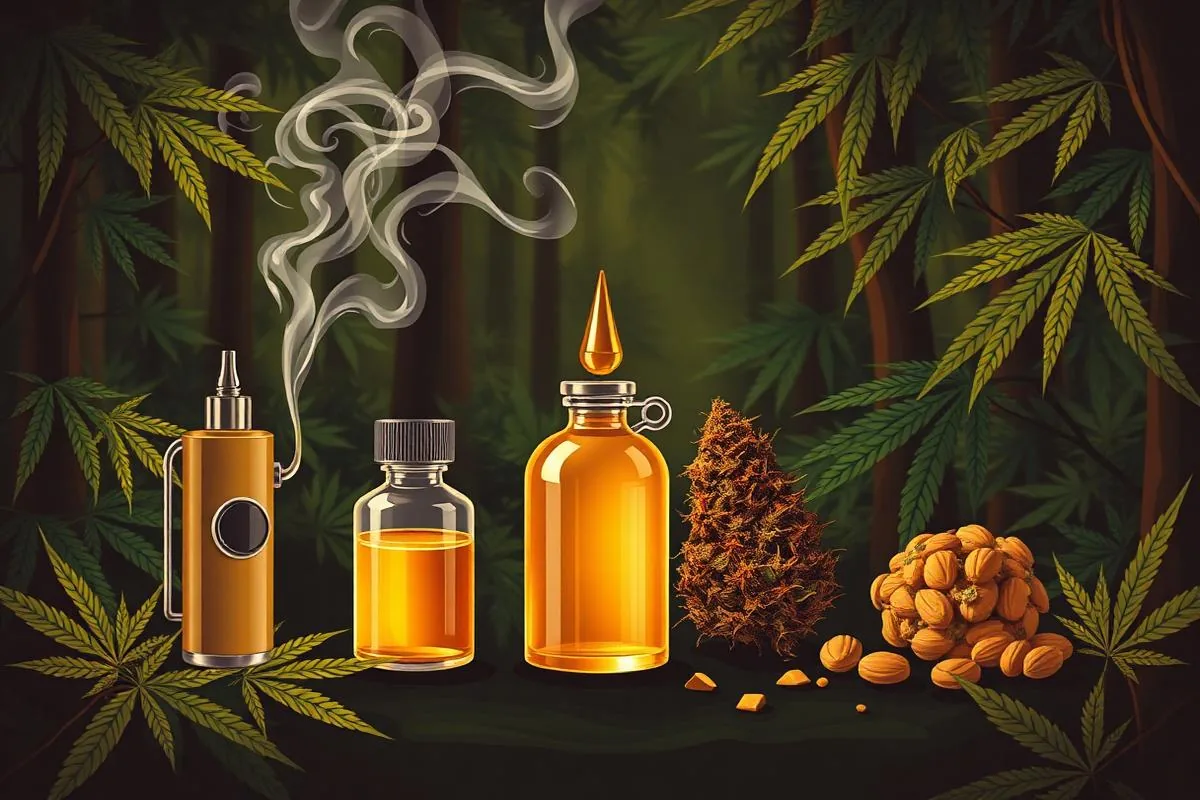
Ob als Dampf aus dem Vaporizer, als Tropfen unter der Zunge oder als Keks aus dem Ofen: Die Konsumform entscheidet maßgeblich über das Erlebnis. Wirkungseintritt, Dauer und Intensität – die Unterschiede sind gewaltig. Ein Überblick über die gängigsten Methoden und ihre Eigenschaften, damit du die richtige Wahl für deine Bedürfnisse triffst.
1. Inhalation: Verdampfen statt verbrennen
Wer eine schnelle Wirkung sucht, inhaliert. Über die Lunge gelangen die Wirkstoffe in Minuten in den Blutkreislauf. Beim Verdampfen, dem sogenannten Vaporisieren, werden die Cannabinoide bei vergleichsweise niedrigen Temperaturen von 180 bis 210 °C gelöst, ohne das Pflanzenmaterial zu verbrennen.
- Wirkungseintritt: 1–5 Minuten
- Wirkdauer: 2–4 Stunden
- Wirkungsmaximum: nach ca. 15–30 Minuten
- Bioverfügbarkeit: ca. 30–40 %
Das Vaporisieren gilt als deutlich schonendere Methode als das Rauchen, da kaum schädliche Verbrennungsprodukte entstehen. Gerade für medizinische Anwender ist die Inhalation per Vaporizer oft ideal, weil sie eine präzise steuerbare Dosierung von verschiedenen Blütensorten ermöglicht. Für besonders potente Effekte greifen erfahrene Konsumenten zu Konzentraten wie Wax oder Rosin und konsumieren sie über das Dabben – eine Hochtemperatur-Verdampfungsmethode mit sehr schnellem Wirkungseintritt.
Cannabis auf Rezept?
Vergleiche Telemedizin-Anbieter und starte noch heute mit deiner Cannabis-Therapie — einfach, legal und von zu Hause.
Jetzt Patient werden →2. Orale Einnahme: Öle und Tropfen
Cannabisextrakte in Ölform werden meist sublingual, also unter die Zunge, getropft. Von dort gelangen die Wirkstoffe direkt über die Mundschleimhaut in den Blutkreislauf und umgehen so teilweise den Verdauungstrakt.
- Wirkungseintritt: 15–45 Minuten (sublingual), 60–120 Minuten (geschluckt)
- Wirkdauer: 4–8 Stunden
- Wirkungsmaximum: nach ca. 1–2 Stunden
- Bioverfügbarkeit: ca. 10–20 %
Öle erlauben eine genaue Dosierung und sind für Patienten geeignet, die eine langanhaltende, gleichmäßige Wirkung benötigen. Ihre Wirksamkeit wird auch wissenschaftlich untersucht, wie eine Studie der Berliner Charité zeigt. Erste reale Versorgungsdaten dazu liefert auch der EKOCAN-Zwischenbericht 2026.
3. Edibles: Die unterschätzte Kraft
In Lebensmitteln verarbeitetes Cannabis, sogenannte Edibles, wird über den Magen-Darm-Trakt aufgenommen. Ein entscheidender Unterschied: In der Leber wird das THC zu 11-Hydroxy-THC umgewandelt – ein Metabolit, der eine deutlich stärkere und andersartige Wirkung entfalten kann.
- Wirkungseintritt: 30 Minuten bis 2 Stunden
- Wirkdauer: 6–12 Stunden
- Wirkungsmaximum: nach ca. 2–4 Stunden
- Bioverfügbarkeit: ca. 4–12 %
Vorsicht ist hier das oberste Gebot. Der verzögerte Wirkungseintritt verleitet Unerfahrene oft dazu, zu früh nachzulegen. Die Folge kann eine unangenehm intensive und stundenlange Erfahrung sein. Es gilt die eiserne Regel: „Start low and go slow.“ Wer Edibles selbst zubereiten möchte, findet erprobte Anleitungen in unseren Cannabis-Rezepten — etwa beim klassischen Cannabutter-Grundrezept.
Cannabis auf Rezept?
Vergleiche Telemedizin-Anbieter und starte noch heute mit deiner Cannabis-Therapie — einfach, legal und von zu Hause.
Jetzt Patient werden →4. Topische Anwendung: Lokal und gezielt
Auf die Haut aufgetragene Cremes und Salben wirken ausschließlich lokal. Sie dringen nicht bis in den Blutkreislauf vor und haben daher keine psychoaktive Wirkung. Ihr Einsatzgebiet sind Hauterkrankungen, lokale Entzündungen oder Muskelschmerzen.
Die Methoden im direkten Vergleich
| Form | Eintritt | Dauer | Dosierbarkeit |
|---|---|---|---|
| Vaporizer | 1–5 Min. | 2–4 Std. | Sehr gut |
| Öl (sublingual) | 15–45 Min. | 4–8 Std. | Sehr gut |
| Edibles | 30–120 Min. | 6–12 Std. | Schwierig |
| Topisch | 15–60 Min. | 2–4 Std. | Gut |
Die richtige Wahl treffen
Die Wahl der Konsumform ist keine bloße Geschmacksfrage, sondern hängt vom Therapieziel, der Erfahrung und dem Alltag ab. Wer akute Symptome schnell lindern muss, greift am ehesten zum Vaporizer. Für eine stabile, langanhaltende Versorgung sind Öle oder – mit der gebotenen Vorsicht – Edibles oft die bessere Option. Unser Produkt-Finder unterstützt dich bei der Auswahl. Informationen, wie du eine ärztliche Verordnung erhältst, findest du in unserem Ratgeber zum Weg auf Rezept.
Whether as vapor from a vaporizer, drops under the tongue, or a cookie from the oven: the form of consumption significantly determines the experience. Onset of effect, duration, and intensity – the differences are enormous. An overview of the most common methods and their characteristics, so you can make the right choice for your needs.
1. Inhalation: Vaping instead of burning
Those looking for a quick effect inhale. The active ingredients reach the bloodstream through the lungs in minutes. When vaporizing, what is known as vaping, cannabinoids are released at comparatively low temperatures of 180 to 210 °C, without burning the plant material.
- Onset of effect: 1–5 minutes
- Duration of effect: 2–4 hours
- Peak effect: after approx. 15–30 minutes
- Bioavailability: approx. 30–40 %
Vaping is considered a much gentler method than smoking, as hardly any harmful combustion products are produced. Especially for medical users, inhalation via a vaporizer is often ideal because it allows for precisely controllable dosing of various flower varieties. For particularly potent effects, experienced consumers turn to concentrates like wax or rosin and consume them via dabbing – a high-temperature vaporization method with a very rapid onset of effect.
Cannabis on prescription?
Compare telemedicine providers and start your cannabis therapy today – easily, legally and from home.
Become a patient now →2. Oral intake: Oils and drops
Cannabis extracts in oil form are usually dripped sublingually, i.e., under the tongue. From there, the active ingredients enter the bloodstream directly via the oral mucosa, partially bypassing the digestive tract.
- Onset of effect: 15–45 minutes (sublingual), 60–120 minutes (swallowed)
- Duration of effect: 4–8 hours
- Peak effect: after approx. 1–2 hours
- Bioavailability: approx. 10–20 %
Oils allow for precise dosing and are suitable for patients who need a long-lasting, consistent effect. Their effectiveness is also being scientifically investigated, as a study by Charité Berlin shows. Initial real-world supply data is also provided by the EKOCAN Interim Report 2026.
3. Edibles: The underestimated power
Cannabis processed into food, known as edibles, is absorbed through the gastrointestinal tract. A crucial difference: in the liver, THC is converted to 11-hydroxy-THC – a metabolite that can produce a significantly stronger and different kind of effect.
- Onset of effect: 30 minutes to 2 hours
- Duration of effect: 6–12 hours
- Peak effect: after approx. 2–4 hours
- Bioavailability: approx. 4–12 %
Caution is paramount here. The delayed onset of effect often tempts inexperienced users to re-dose too early. The result can be an unpleasantly intense and hours-long experience. The iron rule applies: “Start low and go slow.” If you want to prepare edibles yourself, you can find proven instructions in our cannabis recipes – for example, with the classic cannabutter basic recipe.
Cannabis on prescription?
Compare telemedicine providers and start your cannabis therapy today – easily, legally and from home.
Become a patient now →4. Topical application: Local and targeted
Creams and ointments applied to the skin work exclusively locally. They do not penetrate the bloodstream and therefore have no psychoactive effect. Their area of application includes skin conditions, local inflammations, or muscle pain.
The methods in direct comparison
| Form | Onset | Duration | Dosing control |
|---|---|---|---|
| Vaporizer | 1–5 min. | 2–4 hrs. | Very good |
| Oil (sublingual) | 15–45 min. | 4–8 hrs. | Very good |
| Edibles | 30–120 min. | 6–12 hrs. | Difficult |
| Topical | 15–60 min. | 2–4 hrs. | Good |
Making the right choice
The choice of consumption method is not merely a matter of taste, but depends on the therapeutic goal, experience, and daily routine. Those who need quick relief from acute symptoms are most likely to reach for a vaporizer. For stable, long-lasting care, oils or – with due caution – edibles are often the better option. Our Product Finder supports you in making your selection. Information on how to obtain a medical prescription can be found in our guide on getting a prescription.