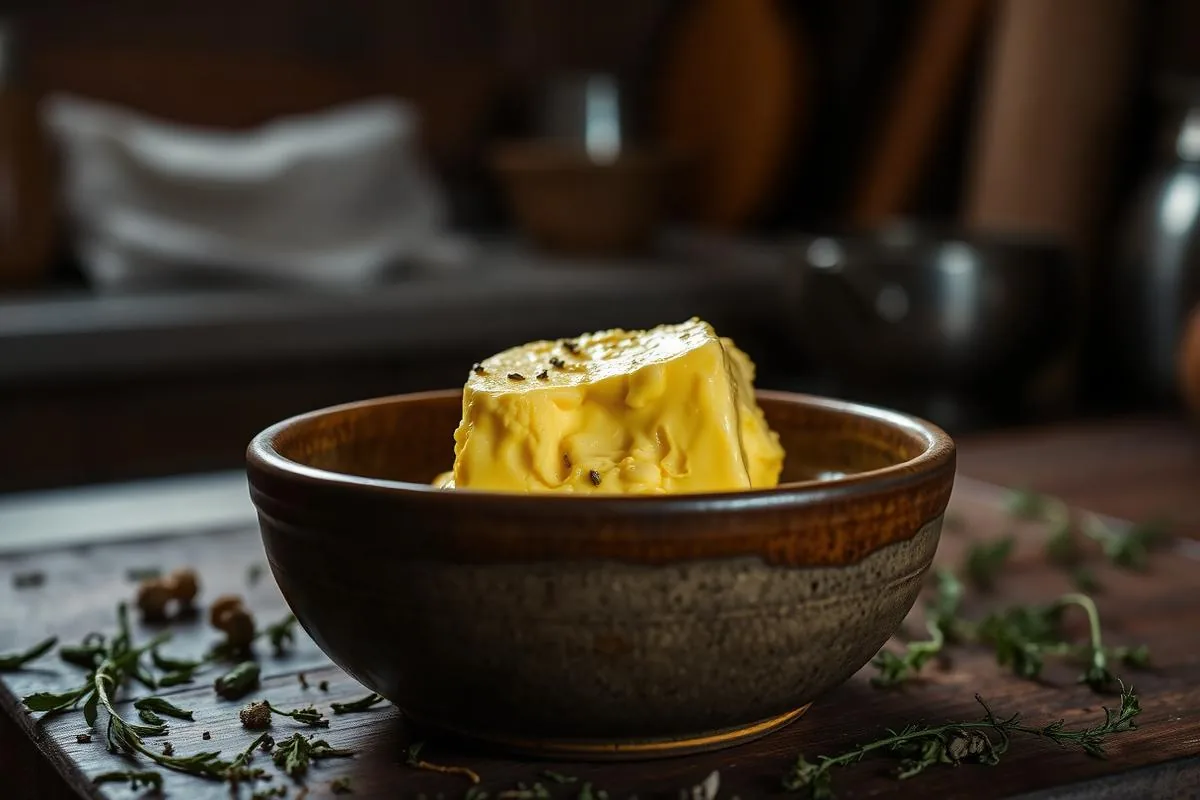
Cannabutter, also mit Cannabis versetzte Butter, ist der Schlüssel zur Welt der Edibles. Von Brownies über Cookies bis hin zu herzhaften Pasta-Saucen: Wer diese Basiszutat zubereiten kann, dem steht die gesamte Cannabis-Küche offen. Wir führen dich Schritt für Schritt durch ein erprobtes Grundrezept.
Warum Cannabutter?
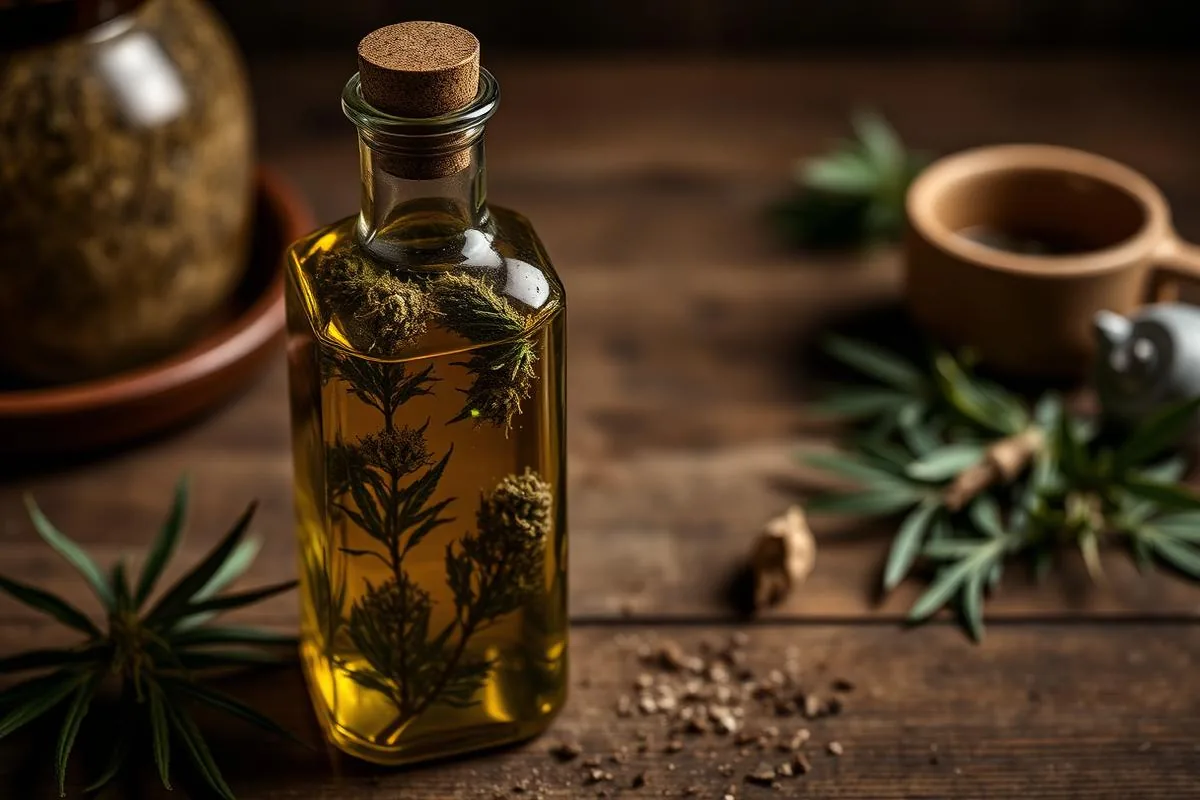
Die Chemie ist einfach: Cannabinoide wie THC sind fettlöslich. Der Körper kann sie nur aufnehmen, wenn sie an ein Fett gebunden sind. Butter mit ihrem hohen Fettanteil von rund 80 Prozent ist dafür der ideale und vielseitigste Träger. Eine gute Alternative, besonders für die mediterrane Küche, ist infundiertes Olivenöl.
Schritt 1: Decarboxylierung
Rohe Cannabisblüten wirken nicht psychoaktiv. Sie enthalten vor allem THCA, eine säurehaltige Vorstufe von THC. Erst kontrolliertes Erhitzen, die sogenannte Decarboxylierung, wandelt das inaktive THCA in das wirksame THC um. Diesen Schritt darfst du niemals überspringen.
So geht's
- Heize den Ofen auf 110 °C vor (Umluft: 100 °C).
- Zerkleinere das Cannabis grob – es sollte nicht zu Pulver zermahlen werden – und verteile es auf einem mit Backpapier ausgelegten Blech.
- Backe es für 40 bis 45 Minuten. Nach etwa der Hälfte der Zeit solltest du das Pflanzenmaterial einmal wenden.
- Die Blüten sind fertig, wenn sie eine goldbraune Farbe angenommen haben und sich trocken anfühlen. Sie dürfen keinesfalls verbrennen.
Cannabis auf Rezept?
Vergleiche Telemedizin-Anbieter und starte noch heute mit deiner Cannabis-Therapie — einfach, legal und von zu Hause.
Jetzt Patient werden →Schritt 2: Infusion
Nach der Aktivierung im Ofen lösen wir nun die Cannabinoide im Fett. Für diese Infusion stellen wir zwei gängige Methoden vor:
Methode A: Kochtopf
- Schmilz 250 g Butter zusammen mit 250 ml Wasser in einem Topf bei geringer Hitze.
- Gib das decarboxylierte Cannabis hinzu.
- Lass die Mischung bei einer konstanten Temperatur zwischen 70 und 85 °C für zwei bis drei Stunden ziehen. Sie darf auf keinen Fall kochen.
- Rühre die Mischung alle 30 Minuten um, um ein Anbrennen zu verhindern.
Methode B: Slow Cooker
- Gib alle Zutaten direkt in den Slow Cooker.
- Lass das Gerät auf der niedrigsten Stufe für vier bis sechs Stunden arbeiten.
- Vorteil dieser Methode: Die Temperatur bleibt sehr konstant, der Aufwand ist minimal.
Schritt 3: Filtern & Abkühlen
- Gieße die noch flüssige Mischung durch ein feines Küchensieb oder ein Käsetuch in ein hitzebeständiges Gefäß.
- Presse das restliche Fett vorsichtig aus dem Pflanzenmaterial. Zu viel Druck kann Bitterstoffe freisetzen und den Geschmack verderben.
- Stelle das Gefäß in den Kühlschrank. Beim Abkühlen trennt sich die Cannabutter vom Wasser und wird zu einer festen oberen Schicht.
- Sobald die Butter fest ist, kannst du das darunterliegende Restwasser einfach abgießen.
Dosierung berechnen
Die Potenz deiner Cannabutter hängt direkt vom THC-Gehalt des Ausgangsmaterials ab. Die Berechnung ist eine Annäherung, aber diese Faustformel hilft bei der Orientierung:
- 1 Gramm Cannabis mit 20 % THC enthält theoretisch 200 mg THC (abzüglich Extraktionsverluste).
- Bei 7 Gramm auf 250 g Butter ergibt das eine Gesamtmenge von rund 1.400 mg THC in der Butter.
- Ein Esslöffel Butter (ca. 14 g) enthält demnach etwa 80 mg THC.
- Für Einsteiger raten wir dringend, mit einer Dosis von 5 bis 10 mg THC zu beginnen und die Wirkung abzuwarten.
Mehr über den verzögerten Wirkungseintritt und die Besonderheiten von Edibles erfährst du in unserem Guide zu Cannabis-Dosierungsformen.
Lagerung
- Im Kühlschrank hält sich die Cannabutter in einem luftdichten Behälter bis zu vier Wochen.
- Im Gefrierfach ist sie, ebenfalls gut verpackt, bis zu sechs Monate haltbar.
- Lagere sie stets lichtgeschützt, um den Abbau der Cannabinoide zu verlangsamen.
Häufige Fehler
- Decarboxylierung vergessen: Ohne die Aktivierung durch Hitze bleibt deine Butter wirkungslos.
- Zu hohe Temperatur: Ab Temperaturen über 100 °C beginnen wertvolle Cannabinoide und Terpene zu verdampfen.
- Zu fein gemahlenes Material: Pulverisiertes Cannabis gelangt durch das Sieb, was die Butter grün färbt und bitter schmecken lässt.
- Ohne Wasser gekocht: Das Wasser fungiert als Puffer und schützt die Butter vor dem Anbrennen bei zu hoher Hitze.
Was du mit Cannabutter machen kannst
Deiner kulinarischen Kreativität sind kaum Grenzen gesetzt. Cannabutter ist die Basis für Klassiker wie Space Brownies und Cannabis Cookies, verfeinert aber auch eine herzhafte Pasta-Sauce, Popcorn, Pralinen oder wird einfach in einen Smoothie gemischt. Denk immer an zwei goldene Regeln: Dosiere vorsichtig und plane eine lange Wartezeit für den Wirkungseintritt von 60 bis 120 Minuten ein.
Du möchtest Cannabis als Medizin nutzen? Alle Informationen zu den gesetzlichen Rahmenbedingungen und dem Weg zum Rezept findest du auf unserer Seite Patient werden.
Cannabutter, meaning cannabis-infused butter, is the key to the world of edibles. From brownies to cookies to savory pasta sauces: If you can prepare this basic ingredient, the entire cannabis kitchen is open to you. We'll guide you step-by-step through a tried-and-tested basic recipe.
Why Cannabutter?
The chemistry is simple: Cannabinoids like THC are fat-soluble. The body can only absorb them when they are bound to a fat. Butter, with its high fat content of around 80 percent, is the ideal and most versatile carrier for this. A good alternative, especially for Mediterranean cuisine, is infused olive oil.
Step 1: Decarboxylation
Raw cannabis flowers are not psychoactive. They primarily contain THCA, an acidic precursor to THC. Only controlled heating, known as decarboxylation, converts inactive THCA into active THC. You must never skip this step.
How to do it
- Preheat the oven to 110 °C (convection oven: 100 °C).
- Roughly grind the cannabis – it should not be pulverized – and spread it on a baking sheet lined with parchment paper.
- Bake it for 40 to 45 minutes. After about half the time, you should turn the plant material once.
- The flowers are ready when they have turned a golden-brown color and feel dry. They must not burn.
Cannabis on prescription?
Compare telemedicine providers and start your cannabis therapy today – simply, legally, and from home.
Become a patient now →Step 2: Infusion
After activation in the oven, we will now dissolve the cannabinoids in fat. For this infusion, we present two common methods:
Method A: Saucepan
- Melt 250 g of butter together with 250 ml of water in a saucepan over low heat.
- Add the decarboxylated cannabis.
- Let the mixture simmer at a constant temperature between 70 and 85 °C for two to three hours. It must not boil.
- Stir the mixture every 30 minutes to prevent burning.
Method B: Slow Cooker
- Add all ingredients directly to the slow cooker.
- Let the appliance work on the lowest setting for four to six hours.
- Advantage of this method: The temperature remains very constant, and the effort is minimal.
Step 3: Filtering & Cooling
- Pour the still liquid mixture through a fine kitchen sieve or cheesecloth into a heat-resistant container.
- Carefully press the remaining fat from the plant material. Too much pressure can release bitter substances and spoil the taste.
- Place the container in the refrigerator. As it cools, the cannabutter separates from the water and forms a solid top layer.
- Once the butter is solid, you can simply pour off the remaining water underneath.
Calculate Dosage
The potency of your cannabutter depends directly on the THC content of the starting material. The calculation is an approximation, but this rule of thumb helps with orientation:
- 1 gram of cannabis with 20% THC theoretically contains 200 mg of THC (minus extraction losses).
- For 7 grams per 250 g of butter, this results in a total of approximately 1,400 mg of THC in the butter.
- A tablespoon of butter (approx. 14 g) therefore contains about 80 mg of THC.
- For beginners, we strongly advise starting with a dose of 5 to 10 mg of THC and waiting for the effect.
You can find more information about the delayed onset of action and the specifics of edibles in our Guide to Cannabis Dosage Forms.
Storage
- In the refrigerator, cannabutter in an airtight container will keep for up to four weeks.
- In the freezer, it will keep for up to six months, also well-packaged.
- Always store it away from light to slow down the degradation of cannabinoids.
Common Mistakes
- Forgetting decarboxylation: Without activation by heat, your butter will be ineffective.
- Too high temperature: Above 100 °C, valuable cannabinoids and terpenes begin to evaporate.
- Too finely ground material: Pulverized cannabis passes through the sieve, turning the butter green and making it taste bitter.
- Boiling without water: The water acts as a buffer and protects the butter from burning at excessively high heat.
What you can do with Cannabutter
There are almost no limits to your culinary creativity. Cannabutter is the basis for classics like Space Brownies and Cannabis Cookies, but it also refines a savory pasta sauce, popcorn, chocolates, or is simply mixed into a smoothie. Always remember two golden rules: Dose carefully and plan for a long waiting time for the onset of effect of 60 to 120 minutes.
Would you like to use cannabis as medicine? All information on the legal framework and the path to a prescription can be found on our Become a patient page.
Edibles-Dosierungsrechner
Schätze die THC-Menge pro Portion bei selbstgemachten Edibles.
Häufige Fragen
Muss ich Cannabis vor dem Einkochen wirklich decarboxylieren?+
Ja. In der rohen Blüte liegt fast das gesamte THC als inaktive Säureform THCA vor. Erst 40 bis 45 Minuten bei rund 110 °C wandeln THCA in wirksames THC um. Ohne diesen Schritt bleibt die Butter weitgehend wirkungslos.
Wie stark ist meine Cannabutter?+
Als Faustformel: 1 Gramm Blüte mit 20 % THC enthält theoretisch 200 mg THC, in der Praxis kommen durch Extraktionsverluste etwa 60 bis 70 Prozent davon in der Butter an. Bei 7 Gramm auf 250 Gramm Butter liegt ein Esslöffel grob bei 50 bis 80 mg THC – deshalb immer klein anfangen.
Wie lange ist Cannabutter haltbar?+
Im luftdichten Gefäß hält sie sich rund zwei Wochen im Kühlschrank und bis zu sechs Monate im Gefrierfach. Reste des Kochwassers unbedingt abgießen, sonst verdirbt die Butter deutlich schneller.
Warum schmeckt meine Cannabutter bitter?+
Zu hohe Temperatur oder zu starkes Auspressen des Pflanzenmaterials lösen Chlorophyll und Bitterstoffe. Halte 70 bis 85 °C ein und presse das Sieb nur sanft aus.