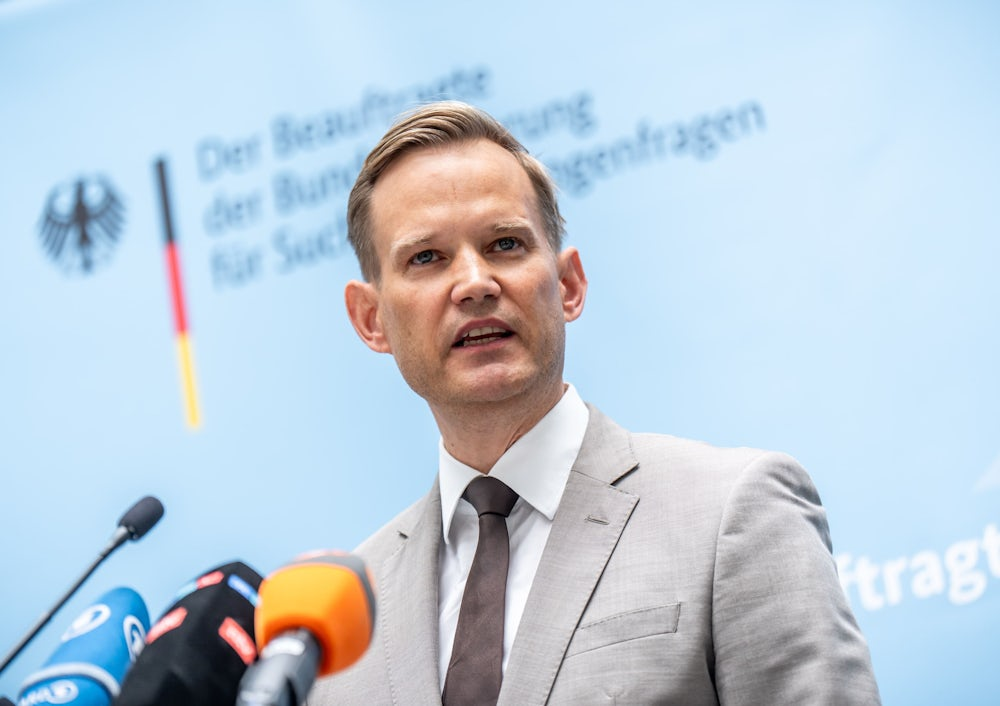
Es ist ein politisches Signal, mit dem so kaum jemand gerechnet hat: Hendrik Streeck, Virologe, CDU-Bundestagsabgeordneter und seit 2025 Drogen- und Suchtbeauftragter der Bundesregierung, hat sich als erster Unionspolitiker ausdrücklich dafür ausgesprochen, in Pilotprojekten den legalen Verkauf von Cannabis an Erwachsene zu erlauben. „Bei möglichen Modellvorhaben wäre ich persönlich offen, aber nur unter sehr strengen Bedingungen", sagte Streeck dem RedaktionsNetzwerk Deutschland (RND).
Warum das überrascht: Die CDU hat die Legalisierung bekämpft
Die Union — und mit ihr weite Teile der CSU — hat das Cannabisgesetz (CanG) der Ampel-Koalition seit dem ersten Entwurf abgelehnt. Im Wahlkampf 2025 hatte die CDU sogar mit der vollständigen Rücknahme der Teillegalisierung geworben. Innenminister Alexander Dobrindt (CSU) attackiert die Cannabis-Forschung der EKOCAN-Evaluation öffentlich, Gesundheitsministerin Nina Warken (CDU) arbeitet an Einschränkungen für die Verschreibung von Medizinalcannabis.
Vor diesem Hintergrund ist Streecks Vorstoß ein politisches Erdbeben in der eigenen Fraktion. Er ist der erste Unionspolitiker, der das umsetzen will, was die Ampel mit der nie verabschiedeten „Säule 2" eigentlich geplant hatte: regionale Modellprojekte mit lizenzierter Abgabe an Erwachsene, wissenschaftlich begleitet — vergleichbar mit dem Schweizer Grashaus Projects.
Streecks Bedingungen: streng, aber pragmatisch
Streeck verbindet sein Ja zu Modellprojekten mit klaren Leitplanken. Im RND-Interview nennt er:
- Keine Normalisierung, keine kommerzielle Ausweitung, keine Werbung.
- Keine Abgabe an junge Erwachsene — denkbar wäre eine Altersgrenze von 25 Jahren.
- Begrenzte Mengen — beispielsweise rund fünf Gramm pro Abgabe.
- Enge wissenschaftliche Begleitung der Modellprojekte.
- Konsum nicht „auf Marktplätzen, in Fußgängerzonen oder an Orten, an denen sich viele Kinder und Jugendliche aufhalten".
Auch die Cannabis Social Clubs nimmt Streeck in den Blick: „Wenn Anbauvereine so kompliziert reguliert sind, dass sie kaum funktionieren, entsteht keine Kontrolle, sondern Ausweichverhalten." Klingt nach Hardliner-Wortwahl — bedeutet in der Konsequenz aber eine Vereinfachung der bestehenden Regeln, nicht ihre Verschärfung.
Cannabis auf Rezept?
Vergleiche Telemedizin-Anbieter und starte noch heute mit deiner Cannabis-Therapie — einfach, legal und von zu Hause.
Jetzt Patient werden →Der entscheidende Punkt: Versorgungslücke und der „Mischmarkt"
Streecks eigentliches Argument ist kein ideologisches, sondern ein realpolitisches: In Deutschland konsumieren rund fünf Millionen Menschen regelmäßig Cannabis. „Das können wir nicht ignorieren", sagte er dem RND. Solange es keinen legalen Bezugsweg für Erwachsene gibt, weichen Konsument:innen massenhaft auf den medizinischen Weg aus — mit teils fragwürdigen Online-Verschreibungen.
Genau hier liegt die Versorgungslücke, die Streecks Vorstoß schließen würde. Die Zahlen sprechen für sich: Laut Bundesgesundheitsministerium ist der Import von Medizinalcannabis vom ersten zum zweiten Halbjahr 2024 um 170 Prozent gestiegen — während die Zahl der Cannabis-Verordnungen zulasten der gesetzlichen Krankenkassen im selben Zeitraum nur um 9 Prozent zunahm. Die Differenz erklärt sich fast vollständig durch Privatrezepte über Online-Plattformen.
Streeck nennt das einen „gefährlichen Mischmarkt": „Wenn über Onlineplattformen massenhaft Cannabis mit fragwürdigen Verfahren verschrieben wird, beschädigt das am Ende auch die Akzeptanz echter medizinischer Anwendungen." Sein Fazit: „Wer Cannabis medizinisch braucht, muss es weiterhin bekommen. Aber der medizinische Weg darf nicht zum Ersatzmodell für Konsum werden."
Warum legale Modellprojekte den Druck nehmen würden
Die Logik ist einfach: Wer Cannabis legal und kontrolliert in einem Fachgeschäft kaufen kann, braucht keinen Umweg über eine Telemedizin-Plattform und kein Privatrezept. Modellprojekte könnten damit gleich mehrere Probleme entschärfen:
- Versorgungslücke schließen: Erwachsene Freizeitkonsument:innen bekommen einen legalen, qualitätskontrollierten Bezugsweg — ohne den medizinischen Pfad zu belasten.
- Druck auf das Verschreibungssystem nehmen: Wer keine medizinische Indikation hat, braucht auch kein Rezept. Das entlastet Ärzt:innen, Apotheken und die GKV.
- Echte Patient:innen schützen: Wenn der „Graubereich" der Privatverschreibung schrumpft, gewinnt der medizinische Cannabis-Markt wieder Glaubwürdigkeit — gerade auch vor dem Hintergrund der geplanten Streichung der GKV-Erstattung für Cannabisblüten.
- Schwarzmarkt austrocknen: Genau das ist das ursprüngliche Ziel jeder Cannabis-Regulierung — und ohne legalen Vertriebsweg für Erwachsene faktisch nicht erreichbar.
- Daten gewinnen: Wissenschaftlich begleitete Pilotprojekte liefern endlich belastbare deutsche Zahlen statt politischer Vermutungen.
Cannabis auf Rezept?
Vergleiche Telemedizin-Anbieter und starte noch heute mit deiner Cannabis-Therapie — einfach, legal und von zu Hause.
Jetzt Patient werden →Was jetzt passieren müsste
Eine rechtliche Grundlage existiert bereits: Die Konsumcannabisforschungsverordnung (KCanForschV), die Ex-Landwirtschaftsminister Cem Özdemir 2024 in Kraft gesetzt hat, erlaubt wissenschaftliche Vorhaben zum Anbau und Vertrieb. Zuständig ist die Bundesanstalt für Landwirtschaft und Ernährung (BLE) — die bislang allerdings alle eingereichten Anträge abgelehnt hat. Eine politische Neubewertung durch das zuständige Ministerium könnte hier sofort Bewegung bringen, ohne dass ein neues Gesetz nötig wäre.
Ob Streecks Vorstoß in der Union mehrheitsfähig wird, ist offen. Innerhalb der CDU/CSU gibt es klare Gegenstimmen, und die Koalition mit der SPD verläuft beim Thema Cannabis quer zu den klassischen Lagern: Während die SPD die Einschränkungen beim Medizinalcannabis blockiert, könnte sie Modellprojekten grundsätzlich offen gegenüberstehen. Eine Allianz zwischen SPD-Pragmatikern und CDU-Evidenzpolitikern wie Streeck wäre rechnerisch möglich.
Fazit: Realismus statt Symbolpolitik
Streecks Position ist konservativ in der Form — Altersgrenze 25, kleine Mengen, keine Werbung — aber progressiv in der Sache. Indem er die Versorgungslücke benennt und die Vermischung von Medizin- und Freizeitkonsum als Problem adressiert, durchbricht er die ideologische Frontstellung, in der die Cannabis-Debatte in Deutschland seit Jahren feststeckt. Für die rund fünf Millionen erwachsenen Konsument:innen könnte das endlich der Einstieg in einen geordneten, legalen Markt werden. Und für echte Patient:innen würde es bedeuten: Ihr Weg über Arzt und Apotheke wird wieder das, was er sein sollte — eine medizinische Versorgung, kein Workaround.
Bis legale Modellprojekte kommen, bleibt für Patient:innen mit medizinischer Indikation der reguläre Weg über Telemedizin und Apotheke. Welche Sorte zu deinem Beschwerdebild passt, zeigt dir unser Produkt-Finder in drei kurzen Fragen — und einen Anbieter-Vergleich findest du unter Patient werden.
Quelle: RedaktionsNetzwerk Deutschland (RND) — Interview mit Hendrik Streeck.
It's a political signal that hardly anyone expected: Hendrik Streeck, virologist, CDU member of the Bundestag, and since 2025 the Federal Government's Commissioner for Drugs and Addiction, has become the first CDU politician to explicitly advocate for allowing the legal sale of cannabis to adults in pilot projects. "I would personally be open to possible pilot projects, but only under very strict conditions," Streeck told RedaktionsNetzwerk Deutschland (RND).
Why this is surprising: The CDU fought legalization
The Union — and with it large parts of the CSU — has rejected the Cannabis Act (CanG) of the Ampel coalition since its first draft. In the 2025 election campaign, the CDU even campaigned with the complete reversal of partial legalization. Interior Minister Alexander Dobrindt (CSU) publicly attacked the cannabis research of the EKOCAN evaluation, while Health Minister Nina Warken (CDU) is working on restrictions for the prescription of medicinal cannabis.
Against this background, Streeck's initiative is a political earthquake within his own parliamentary group. He is the first Union politician who wants to implement what the Ampel actually planned with the never-adopted "Pillar 2": regional model projects with licensed dispensing to adults, scientifically monitored — comparable to the Swiss Grashaus Projects.
Streeck's conditions: strict, but pragmatic
Streeck links his "yes" to model projects with clear guidelines. In the RND interview, he mentions:
- No normalization, no commercial expansion, no advertising.
- No dispensing to young adults — a conceivable age limit would be 25 years.
- Limited quantities — for example, around five grams per dispense.
- Close scientific monitoring of the model projects.
- Consumption not "in marketplaces, pedestrian zones or in places where many children and young people are present".
Streeck also considers Cannabis Social Clubs: "If cultivation associations are so complicated to regulate that they can hardly function, there will be no control, but rather evasive behavior." This sounds like hardliner rhetoric, but in effect it means a simplification of the existing rules, not their tightening.
Cannabis on prescription?
Compare telemedicine providers and start your cannabis therapy today — simply, legally, and from home.
Become a patient now →The crucial point: supply gap and the "mixed market"
Streeck's actual argument is not ideological, but realpolitik: In Germany, around five million people regularly consume cannabis. "We cannot ignore this," he told RND. As long as there is no legal way for adults to obtain it, consumers are massively resorting to the medical route — with sometimes questionable online prescriptions.
This is precisely the supply gap that Streeck's initiative would close. The numbers speak for themselves: According to the Federal Ministry of Health, the import of medicinal cannabis increased by 170 percent from the first to the second half of 2024 — while the number of cannabis prescriptions at the expense of statutory health insurance schemes only increased by 9 percent in the same period. The difference is almost entirely explained by private prescriptions via online platforms.
Streeck calls this a "dangerous mixed market": "If cannabis is massively prescribed via online platforms using questionable procedures, it ultimately damages the acceptance of genuine medical applications." His conclusion: "Anyone who needs cannabis medically must continue to receive it. But the medical route must not become a substitute model for consumption."
Why legal pilot projects would relieve pressure
The logic is simple: anyone who can buy cannabis legally and in a controlled manner in a specialist store does not need to take a detour via a telemedicine platform or a private prescription. Model projects could thus defuse several problems:
- Close the supply gap: Adult recreational consumers gain a legal, quality-controlled source — without burdening the medical path.
- Relieve pressure on the prescription system: Those who do not have a medical indication do not need a prescription. This relieves doctors, pharmacies, and statutory health insurance.
- Protect genuine patients: If the "grey area" of private prescriptions shrinks, the medical cannabis market regains credibility — especially in light of the planned deletion of GKV reimbursement for cannabis flowers.
- Dry up the black market: This is precisely the original goal of any cannabis regulation — and practically unreachable without a legal distribution channel for adults.
- Gain data: Scientifically accompanied pilot projects finally provide reliable German figures instead of political assumptions.
Cannabis on prescription?
Compare telemedicine providers and start your cannabis therapy today — simply, legally, and from home.
Become a patient now →What needs to happen now
A legal basis already exists: the Cannabis for Consumption Research Ordinance (KCanForschV), which former Minister of Agriculture Cem Özdemir put into force in 2024, allows scientific projects for cultivation and distribution. The Federal Agency for Agriculture and Food (BLE) is responsible — which so far has rejected all submitted applications. A political re-evaluation by the responsible ministry could immediately bring movement here, without the need for a new law.
Whether Streeck's initiative will gain a majority in the Union is uncertain. Within the CDU/CSU, there are clear dissenting voices, and the coalition with the SPD on the issue of cannabis cuts across traditional camps: while the SPD is blocking restrictions on medicinal cannabis, it could in principle be open to model projects. An alliance between SPD pragmatists and CDU evidence-based politicians like Streeck would be numerically possible.
Conclusion: Realism instead of symbolic politics
Streeck's position is conservative in form — age limit 25, small quantities, no advertising — but progressive in content. By naming the supply gap and addressing the mixing of medical and recreational consumption as a problem, he breaks through the ideological stalemate that has gripped the cannabis debate in Germany for years. For the approximately five million adult consumers, this could finally be the entry into an ordered, legal market. And for real patients, it would mean: their path through doctor and pharmacy will again be what it should be — medical care, not a workaround.
Until legal pilot projects arrive, the regular route via telemedicine and pharmacy remains for patients with a medical indication. Our Product Finder will show you in three short questions which strain suits your condition — and you can find a provider comparison under Become a patient.
Source: RedaktionsNetzwerk Deutschland (RND) — Interview with Hendrik Streeck.