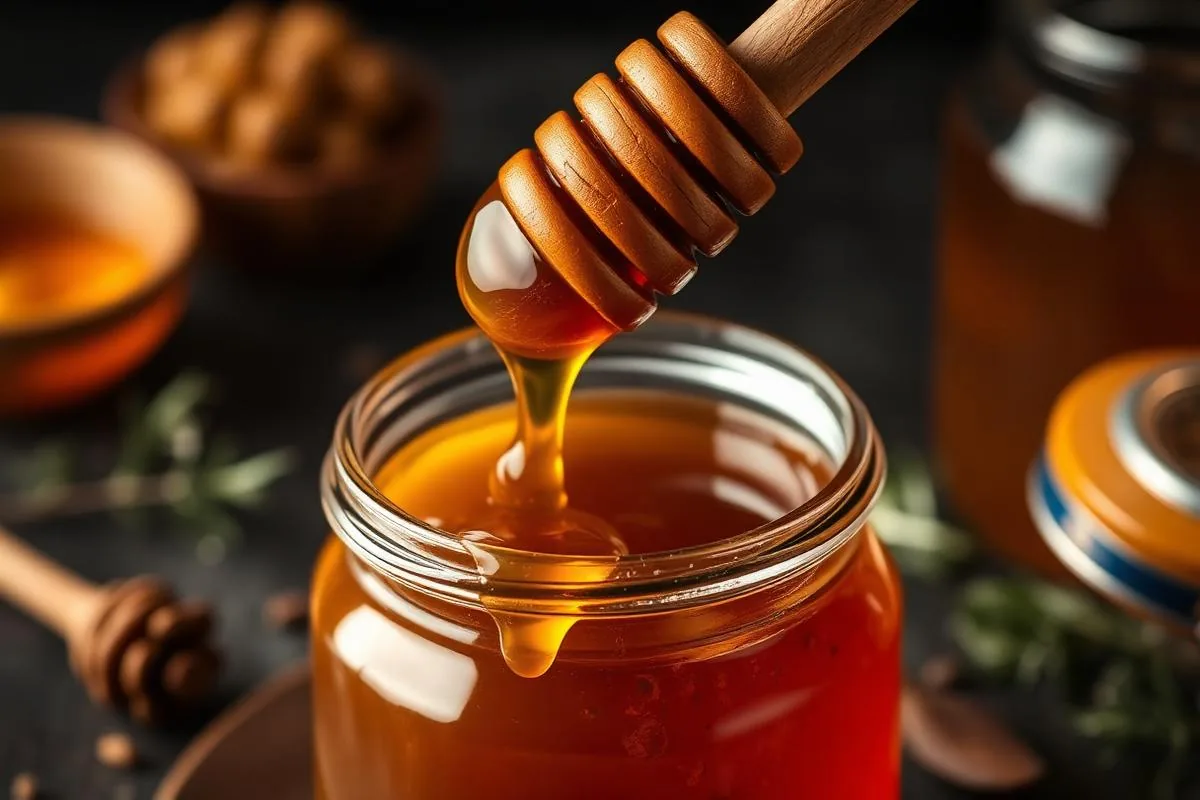
Cannabis-Honig ist eine der vielseitigsten Grundlagen für Edibles: Er ist süß, natürlich und blitzschnell zur Hand. Ob im Tee, auf dem Toast, im Joghurt oder einfach pur – dieses Rezept macht aus einfachem Honig eine flexible Zutat für die Cannabis-Küche.
Zutaten
- 250 g flüssiger Honig – am besten direkt vom Imker in Bio-Qualität
- 3–5 g Cannabisblüten, bereits decarboxyliert
Zubereitung
Schritt 1: Decarboxylierung
Dieser Schritt ist essenziell, um das THCA in aktives THC umzuwandeln. Heize die Cannabisblüten dafür im Ofen bei 110 °C für 40 Minuten. Eine ausführliche Erklärung des Prozesses findest Du in unserem Cannabutter-Guide.
Schritt 2: Infusion
- Fülle den Honig und das vorbereitete Cannabis in ein hitzebeständiges Einmachglas.
- Stelle das Glas in einen Topf mit Wasser, um ein sanftes Wasserbad zu erzeugen.
- Erwärme das Wasserbad langsam auf eine Temperatur zwischen 65 und 70 °C. Lasse den Honig für 40 bis 60 Minuten ziehen.
- Rühre die Mischung etwa alle zehn Minuten sorgfältig um, damit sich die Wirkstoffe gleichmäßig verteilen.
Cannabis auf Rezept?
Vergleiche Telemedizin-Anbieter und starte noch heute mit deiner Cannabis-Therapie — einfach, legal und von zu Hause.
Jetzt Patient werden →Schritt 3: Filtern (optional)
Nach der Infusion kannst Du die Pflanzenreste mit einem feinen Sieb oder einem Käsetuch aus dem Honig filtern. Für maximale Potenz empfiehlt es sich jedoch, sie einfach darin zu belassen. Die feinen Partikel stören geschmacklich kaum und garantieren, dass keine Cannabinoide verloren gehen.
Dosierung
- Rechenbeispiel: Bei 3 g Cannabis mit angenommenen 20 % THC enthält Deine gesamte Charge rund 600 mg THC.
- Pro Esslöffel: 250 g Honig entsprechen etwa 17 Esslöffeln. Das ergibt eine Dosis von circa 35 mg THC pro Esslöffel.
- Empfehlung für Einsteiger: Beginne mit einem halben Teelöffel (ca. 6 mg THC) und warte die volle Wirkung ab. Taste Dich langsam an Deine Dosis heran.
- Wirkungseintritt: Rechne mit 45 bis 90 Minuten, bis die Wirkung einsetzt.
Verwendungsideen
- Tee verfeinern: Einen Teelöffel in eine Tasse heißen (nicht kochenden) Tee rühren.
- Auf dem Brot: Klassisch auf einem frischen Toast, pur oder in Kombination mit Erdnussbutter.
- Frühstücks-Booster: Verleiht Deinem Joghurt oder Müsli am Morgen eine besondere Note.
- Salatdressings: Kreiere ein Honig-Senf-Dressing mit dem gewissen Etwas.
- Für Smoothies: Eine gesunde und natürliche Alternative zu Industriezucker.
- Hausgemachte Limonade: Die Basis für erfrischende Drinks an warmen Tagen.
- Süßes Popcorn: Einfach über das fertige Popcorn träufeln.
- Beim Backen: Ersetzt herkömmlichen Zucker und verleiht vielen Rezepten eine neue Dimension.
Lagerung
- In einem luftdichten Glas an einem dunklen Ort bei Raumtemperatur gelagert, ist der Honig bis zu 6 Monate haltbar.
- Dank seiner natürlichen konservierenden Eigenschaften muss der Honig nicht in den Kühlschrank.
- Bewahre den Honig unbedingt sicher vor Kindern und Haustieren auf. Gut beschriften!
Sicherheit und Qualität
- Die Temperatur ist entscheidend: Honig verliert über 70 °C wertvolle Enzyme und Nährstoffe. Halte dich an die angegebene Temperatur.
- Auch für die Cannabinoide ist Hitze ein Faktor. Ab etwa 100 °C beginnen sie zu verdampfen, was die Potenz des Honigs reduziert.
- Lagere das Endprodukt stets unzugänglich für Kinder und Haustiere, am besten in einem klar beschrifteten Gefäß.
Wenn Du auf den Geschmack gekommen bist, versuche Dich doch auch an selbstgemachten Cannabis-Pralinen oder einer herzhaften Cannabis-Pasta-Sauce. Und falls Du Dich fragst, wie man legal an medizinisches Cannabis kommt: Wir erklären die aktuellen Bezugswege und beschreiben den Weg zum Cannabis-Rezept.
Cannabis honey is one of the most versatile bases for edibles: It's sweet, natural, and ready in a flash. Whether in tea, on toast, in yogurt, or simply by itself – this recipe turns simple honey into a flexible ingredient for cannabis cuisine.
Ingredients
- 250 g liquid honey – preferably organic quality directly from the beekeeper
- 3–5 g cannabis flowers, already decarboxylated
Preparation
Step 1: Decarboxylation
This step is essential to convert THCA into active THC. Heat the cannabis flowers in the oven at 110 °C for 40 minutes. A detailed explanation of the process can be found in our Cannabutter Guide.
Step 2: Infusion
- Pour the honey and prepared cannabis into a heat-resistant canning jar.
- Place the jar in a pot of water to create a gentle water bath.
- Slowly heat the water bath to a temperature between 65 and 70 °C. Let the honey steep for 40 to 60 minutes.
- Stir the mixture thoroughly approximately every ten minutes to ensure the active ingredients are evenly distributed.
Cannabis on prescription?
Compare telemedicine providers and start your cannabis therapy today – easily, legally, and from home.
Become a patient now →Step 3: Filtering (optional)
After infusion, you can filter out the plant matter from the honey using a fine sieve or cheesecloth. However, for maximum potency, it is recommended to simply leave them in. The fine particles hardly affect the taste and ensure no cannabinoids are lost.
Dosage
- Example calculation: With 3 g of cannabis and an assumed 20 % THC, your entire batch contains approximately 600 mg THC.
- Per tablespoon: 250 g of honey is about 17 tablespoons. This results in a dose of approximately 35 mg THC per tablespoon.
- Recommendation for beginners: Start with half a teaspoon (approx. 6 mg THC) and wait for the full effect. Slowly approach your personal dose.
- Onset of effects: Expect 45 to 90 minutes for the effects to set in.
Usage Ideas
- Refining tea: Stir one teaspoon into a cup of hot (not boiling) tea.
- On bread: Classically on fresh toast, plain or combined with peanut butter.
- Breakfast booster: Adds a special touch to your morning yogurt or muesli.
- Salad dressings: Create a honey-mustard dressing with a special twist.
- For smoothies: A healthy and natural alternative to industrial sugar.
- Homemade lemonade: The base for refreshing drinks on warm days.
- Sweet popcorn: Simply drizzle over finished popcorn.
- When baking: Replaces conventional sugar and adds a new dimension to many recipes.
Storage
- Stored in an airtight jar in a dark place at room temperature, the honey will last up to 6 months.
- Thanks to its natural preservative properties, the honey does not need to be refrigerated.
- Always store the honey out of reach of children and pets. Label clearly!
Safety and Quality
- Temperature is crucial: Honey loses valuable enzymes and nutrients above 70 °C. Adhere to the specified temperature.
- Heat is also a factor for cannabinoids. Above approximately 100 °C, they begin to vaporize, reducing the potency of the honey.
- Always store the final product inaccessible to children and pets, preferably in a clearly labeled container.
If you've developed a taste for it, why not try making your own cannabis pralines or a hearty cannabis pasta sauce. And if you're wondering how to legally obtain medical cannabis: We explain the current procurement methods and describe the path to a cannabis prescription.
Edibles-Dosierungsrechner
Schätze die THC-Menge pro Portion bei selbstgemachten Edibles.
Häufige Fragen
Funktioniert Honig ohne zusätzliches Fett?+
Nur eingeschränkt. Honig enthält kaum Fett, deshalb wird meist mit etwas Kokosöl oder einer Lecithin-Zugabe gearbeitet, damit sich die Cannabinoide binden.
Bei welcher Temperatur wird Honig infundiert?+
Im Wasserbad bei maximal 70 °C für rund 60 Minuten. Höhere Temperaturen zerstören die wertvollen Enzyme des Honigs und treiben Terpene aus.
Wie dosiere ich Cannabis-Honig im Tee?+
Beginne mit einem Teelöffel und warte mindestens zwei Stunden. Da Honig oft in heißen Getränken landet, wirkt er etwas schneller als klassische Backwaren.