Drei Ziffern, eine ganze Subkultur: 420 ist der wohl berühmteste Code der Cannabis-Welt. Er steht auf T-Shirts, in Songtexten, in Filmtiteln — und ist gleichzeitig ein Datum: Am 20. April (im US-Format 4/20) feiert die globale Cannabis-Community ihren inoffiziellen Weltkiffertag. Doch woher kommt diese Zahl eigentlich? Die Antwort ist überraschend konkret — und führt zurück nach Kalifornien, ins Jahr 1971.
San Rafael, 1971: Fünf Schüler und eine Schatzkarte
Die Geschichte beginnt an der San Rafael High School in Kalifornien. Eine Gruppe von fünf Freunden — Steve Capper, Dave Reddix, Jeffrey Noel, Larry Schwartz und Mark Gravich — nannte sich selbst The Waldos, weil sie ihren Stammtreffpunkt vor einer Mauer („wall") auf dem Schulgelände hatten. Im Herbst 1971 erfuhren sie von einer Cannabis-Plantage, die ein Küstenwächter angeblich heimlich in der Nähe von Point Reyes angebaut, dann aber aus Angst vor Entdeckung zurückgelassen hatte. Es kursierte sogar eine handgezeichnete Karte.
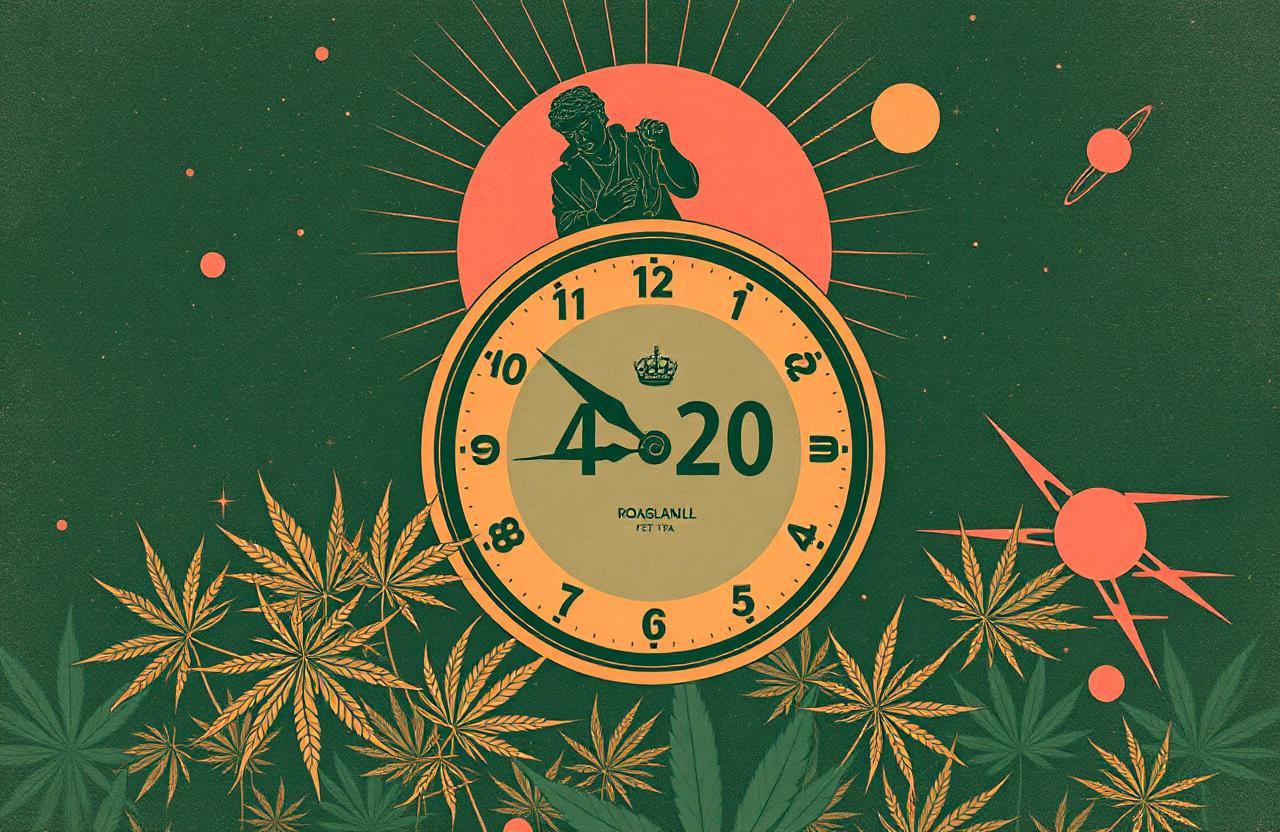
Die Waldos verabredeten sich, gemeinsam nach der Plantage zu suchen — immer um 16:20 Uhr an der Statue von Louis Pasteur auf dem Schulgelände, gleich nach Trainingsende. Die Uhrzeit wurde zum Code: Statt offen über Cannabis zu reden, riefen sie sich auf den Schulfluren einfach „4:20 Louis!" zu. Die Plantage fanden sie nie. Aber der Code blieb — und wurde zum festen Ritual: 4:20 als Uhrzeit zum Konsumieren.
Cannabis auf Rezept?
Vergleiche Telemedizin-Anbieter und starte noch heute mit deiner Cannabis-Therapie — einfach, legal und von zu Hause.
Jetzt Patient werden →Wie 420 die Welt eroberte: Der Grateful-Dead-Effekt
Ohne einen besonderen Zufall wäre der Code wohl nie aus San Rafael herausgekommen. Doch einer der Waldos, Mark Gravich, hatte einen Bruder, der für die legendäre Band Grateful Dead arbeitete — die ihren Sitz ebenfalls in San Rafael hatte. Über das weitläufige Roadie-, Fan- und Band-Netzwerk der „Deadheads" verbreitete sich „420" auf Konzerten quer durch die USA. Wer Cannabis suchte, fragte nach „420". Wer welches anbot, kündigte das mit der Zahl an.
Den endgültigen Sprung in die Pop-Kultur schaffte der Code Anfang der 1990er. Die US-Cannabis-Bibel High Times druckte 1991 ein Flyer-Faksimile ab, auf dem zur Versammlung am „4/20" aufgerufen wurde. Von da an war 420 nicht mehr nur eine Uhrzeit — sondern ein Datum, ein Symbol und schließlich ein globaler Hashtag.
Hartnäckige Mythen: Was 420 nicht bedeutet
Rund um den Code haben sich über Jahrzehnte zahlreiche Legenden gebildet. Keine davon stimmt — die Waldos selbst haben die Originalgeschichte mit Briefen, Flyern und Zeitzeugen längst dokumentiert und beim Smithsonian eingereicht. Trotzdem halten sich diese Mythen hartnäckig:
- Polizeicode 420: Die Behauptung, „420" sei der Funkcode der kalifornischen Polizei für Cannabisbesitz, ist falsch. Es gibt keinen solchen offiziellen Code.
- Anzahl der Wirkstoffe: Die Idee, Cannabis enthalte 420 chemische Verbindungen, ist Unsinn — die tatsächliche Zahl liegt deutlich höher.
- Bob Dylan, „Rainy Day Women #12 & 35": 12 × 35 = 420 — angeblich eine Hommage an Cannabis. Auch das ist eine schöne Anekdote, aber eine nachträgliche Konstruktion.
- Hitlers Geburtstag (20. April): Der einzige zufällige Bezug, der in der Cannabis-Community immer wieder zu Diskussionen führt — mit dem Ursprung des Codes hat das Datum aber nichts zu tun.
Cannabis auf Rezept?
Vergleiche Telemedizin-Anbieter und starte noch heute mit deiner Cannabis-Therapie — einfach, legal und von zu Hause.
Jetzt Patient werden →Vom Geheimcode zum globalen Feiertag
Heute ist der 20. April der wichtigste Tag im Cannabis-Kalender. In Vancouver, Denver, San Francisco und Toronto versammeln sich jedes Jahr Zehntausende in Parks, oft pünktlich zum Countdown auf 16:20 Uhr. In Deutschland war 420 lange ein Insider-Code — mit der Teillegalisierung durch das KCanG seit dem 1. April 2024 ist daraus eine offen gefeierte Tradition geworden. Cannabis Social Clubs nutzen den Tag für Tag-der-offenen-Tür-Aktionen, Apotheken und Fachhändler legen Promotions auf den 20. April, und in Berlin oder Köln gibt es mittlerweile öffentliche 420-Picknicks im Park.
Politisch ist der Tag inzwischen ein wichtiger Termin: Aktivisten nutzen ihn, um auf offene Baustellen der Reform aufmerksam zu machen — etwa die verzögerten Modellprojekte zur kommerziellen Abgabe oder die drohende Streichung der GKV-Erstattung für Cannabisblüten. Aus dem Geheimcode von fünf Schülern ist eine politische Bühne geworden.
Was 420 für dich bedeuten kann
Ob du den 20. April mit Freunden im Park feierst, einen ruhigen Abend mit Vape-Pen einlegst oder dich erstmals mit dem Thema medizinisches Cannabis auseinandersetzt — 420 ist heute vor allem eines: ein Anlass, offen über Cannabis zu sprechen. Über Genuss. Über Medizin. Über sinnvolle Regulierung. Genau diese Offenheit ist es, die Patienten in Deutschland helfen kann, ihre Therapie nicht länger zu verstecken.
Wenn du wissen willst, welche Konsumform für dich die richtige ist, hilft unser Guide zu den Dosierungsformen. Und wer mit dem Gedanken spielt, Cannabis als Medizin zu nutzen, findet in unserem Bezugswege-Guide alle legalen Optionen.
Cannabis auf Rezept?
Vergleiche Telemedizin-Anbieter und starte noch heute mit deiner Cannabis-Therapie — einfach, legal und von zu Hause.
Jetzt Patient werden →Three digits, an entire subculture: 420 is arguably the most famous code in the cannabis world. It appears on T-shirts, in song lyrics, in movie titles — and is also a date: On April 20th (in the US format 4/20), the global cannabis community celebrates its unofficial World Weed Day. But where does this number actually come from? The answer is surprisingly specific — and leads back to California, in 1971.
San Rafael, 1971: Five Students and a Treasure Map
The story begins at San Rafael High School in California. A group of five friends — Steve Capper, Dave Reddix, Jeffrey Noel, Larry Schwartz, and Mark Gravich — called themselves The Waldos, because their hangout spot was in front of a wall on the school grounds. In the fall of 1971, they heard about a cannabis plantation that a Coast Guard officer allegedly had secretly grown near Point Reyes, but then abandoned for fear of discovery. A hand-drawn map was even circulating.
The Waldos agreed to search for the plantation together — always at 4:20 PM by the statue of Louis Pasteur on the school grounds, right after practice ended. The time became a code: Instead of openly talking about cannabis, they simply called out "4:20 Louis!" to each other in the school hallways. They never found the plantation. But the code stuck — and became a fixed ritual: 4:20 as a time to consume.
Cannabis on prescription?
Compare telemedicine providers and start your cannabis therapy today — simply, legally, and from home.
Become a patient now →How 420 Conquered the World: The Grateful Dead Effect
Without a particular coincidence, the code would probably never have left San Rafael. But one of the Waldos, Mark Gravich, had a brother who worked for the legendary band Grateful Dead — who were also based in San Rafael. Through the extensive roadie, fan, and band network of the "Deadheads," "420" spread at concerts across the USA. Those looking for cannabis asked for "420." Those offering it announced it with the number.
The code finally made the leap into pop culture in the early 1990s. The US cannabis bible High Times printed a flyer facsimile in 1991 that called for a gathering on "4/20." From then on, 420 was no longer just a time — but a date, a symbol, and finally a global hashtag.
Persistent Myths: What 420 Doesn't Mean
Over decades, numerous legends have formed around the code. None of them are true — the Waldos themselves have long documented the original story with letters, flyers, and eyewitnesses and submitted it to the Smithsonian. Nevertheless, these myths persist:
- Police Code 420: The claim that "420" is the California police radio code for cannabis possession is false. There is no such official code.
- Number of Active Ingredients: The idea that cannabis contains 420 chemical compounds is nonsense — the actual number is significantly higher.
- Bob Dylan, "Rainy Day Women #12 & 35": 12 × 35 = 420 — allegedly a tribute to cannabis. This is also a nice anecdote, but a retroactive construction.
- Hitler's Birthday (April 20th): The only coincidental reference that repeatedly leads to discussions in the cannabis community — but the date has nothing to do with the origin of the code.
Cannabis on prescription?
Compare telemedicine providers and start your cannabis therapy today — simply, legally, and from home.
Become a patient now →From Secret Code to Global Holiday
Today, April 20th is the most important date in the cannabis calendar. In Vancouver, Denver, San Francisco, and Toronto, tens of thousands gather in parks every year, often precisely for the countdown to 4:20 PM. In Germany, 420 was long an insider code — with partial legalization through the KCanG since April 1, 2024, it has become an openly celebrated tradition. Cannabis Social Clubs use the day for open house events, pharmacies and specialized retailers launch promotions on April 20th, and in Berlin or Cologne, there are now public 420 picnics in the park.
Politically, the day has become an important date: Activists use it to draw attention to pending issues of reform — such as the delayed commercial distribution pilot projects or the imminent cancellation of GKV reimbursement for cannabis flowers. What started as a secret code for five students has become a political stage.
What 420 Can Mean for You
Whether you celebrate April 20th with friends in the park, spend a quiet evening with a vape pen, or explore medical cannabis for the first time — 420 is above all one thing today: an occasion to speak openly about cannabis. About enjoyment. About medicine. About sensible regulation. It is precisely this openness that can help patients in Germany no longer hide their therapy.
If you want to know which form of consumption is right for you, our Guide to Dosage Forms can help. And those considering using cannabis as medicine will find all legal options in our Procurement Guide.
Cannabis on prescription?
Compare telemedicine providers and start your cannabis therapy today — simply, legally, and from home.
Become a patient now →