Cannabis und Mythen: eine zähe Verbindung. Legenden, die sich seit Jahrzehnten halten. Manche haben einen wahren Kern, viele sind schlicht falsch. Wir prüfen die acht hartnäckigsten Behauptungen – und was die Wissenschaft wirklich dazu sagt.
Mythos 1: „Cannabis ist eine Einstiegsdroge"
Faktencheck: Weitgehend widerlegt. Die „Gateway-Hypothese“ ist ein Klassiker der Drogenprävention, doch die Forschung zeichnet ein anderes Bild. Die große Mehrheit der Cannabis-Konsumenten steigt nicht auf härtere Drogen um. Der entscheidende Faktor scheint nicht pharmakologischer, sondern sozialer Natur zu sein: Wo der Markt reguliert ist, wie in den Niederlanden oder Kanada, entfällt der Kontakt zum illegalen Drogenhandel. Und damit der Zugang zu anderen Substanzen. Auch der erste EKOCAN-Zwischenbericht zur Teillegalisierung in Deutschland fand keinen Hinweis auf einen steigenden Konsum harter Drogen.
Mythos 2: „Cannabis macht dumm"
Faktencheck: Kommt auf Alter und Dosis an. Bei Erwachsenen sind kognitive Einbußen nach dem Konsum meist vorübergehend und bilden sich wieder zurück. Die oft zitierte Dunedin-Studie von 2012, die einen dauerhaften IQ-Verlust feststellte, untersuchte Jugendliche, deren Gehirn sich noch in der Entwicklung befand und die exzessiv konsumierten. Für erwachsene Gelegenheitskonsumenten konnte ein permanenter kognitiver Schaden bisher nicht belegt werden.
Cannabis auf Rezept?
Vergleiche Telemedizin-Anbieter und starte noch heute mit deiner Cannabis-Therapie — einfach, legal und von zu Hause.
Jetzt Patient werden →Mythos 3: „Cannabis zerstört die Lunge wie Zigaretten"
Faktencheck: Stimmt nur beim Rauchen – und ist vermeidbar. Wer Cannabis als Joint konsumiert, insbesondere mit Tabak gemischt, atmet Verbrennungsprodukte ein. Das reizt die Lunge. Eine Langzeitstudie der UCLA fand jedoch heraus, dass moderates, reines Cannabis-Rauchen die Lungenfunktion weitaus weniger beeinträchtigt als Tabak. Die Lösung ist technischer Natur: Verdampfen statt verbrennen. Ein Vaporizer erhitzt das Material nur so weit, dass die Wirkstoffe freigesetzt werden — mehr dazu in unserem Guide zu den Konsumformen. Auch Dabben kommt ohne offene Flamme aus, ist wegen der hohen Wirkstoffkonzentration aber nur für erfahrene Konsumenten gedacht.
Mythos 4: „Cannabis macht süchtig"
Faktencheck: Eine psychische Abhängigkeit ist möglich, aber seltener als bei Alkohol oder Tabak. Cannabis kann psychisch abhängig machen. Das Risiko betrifft laut Studien etwa 9 Prozent der regelmäßigen Konsumenten. Zum Vergleich: Bei Alkohol liegt die Rate bei 15 Prozent, bei Tabak sogar bei 32 Prozent. Eine ausgeprägte körperliche Abhängigkeit ist selten. Entzugserscheinungen wie Reizbarkeit oder Schlafprobleme können zwar auftreten, klingen aber meist nach kurzer Zeit wieder ab.
Cannabis auf Rezept?
Vergleiche Telemedizin-Anbieter und starte noch heute mit deiner Cannabis-Therapie — einfach, legal und von zu Hause.
Jetzt Patient werden →Mythos 5: „Cannabis löst Psychosen aus"
Faktencheck: Kompliziert. Cannabis kann ein Auslöser sein, aber keine Ursache. Die Forschung zeigt eine Korrelation, keine Kausalität. Starker Konsum, besonders von THC-reichen Sorten in jungen Jahren, kann bei Personen mit genetischer Veranlagung das Psychoserisiko erhöhen oder einen Ausbruch beschleunigen. Cannabis „erzeugt“ also keine Psychosen aus dem Nichts. CBD, der nicht-berauschende Gegenspieler des THC, scheint hingegen antipsychotische Eigenschaften zu besitzen. Forschung, wie die Charité-Studie zu CBD, unterstreicht das therapeutische Potenzial von Cannabinoiden.
Mythos 6: „Alle Cannabis-Sorten wirken gleich"
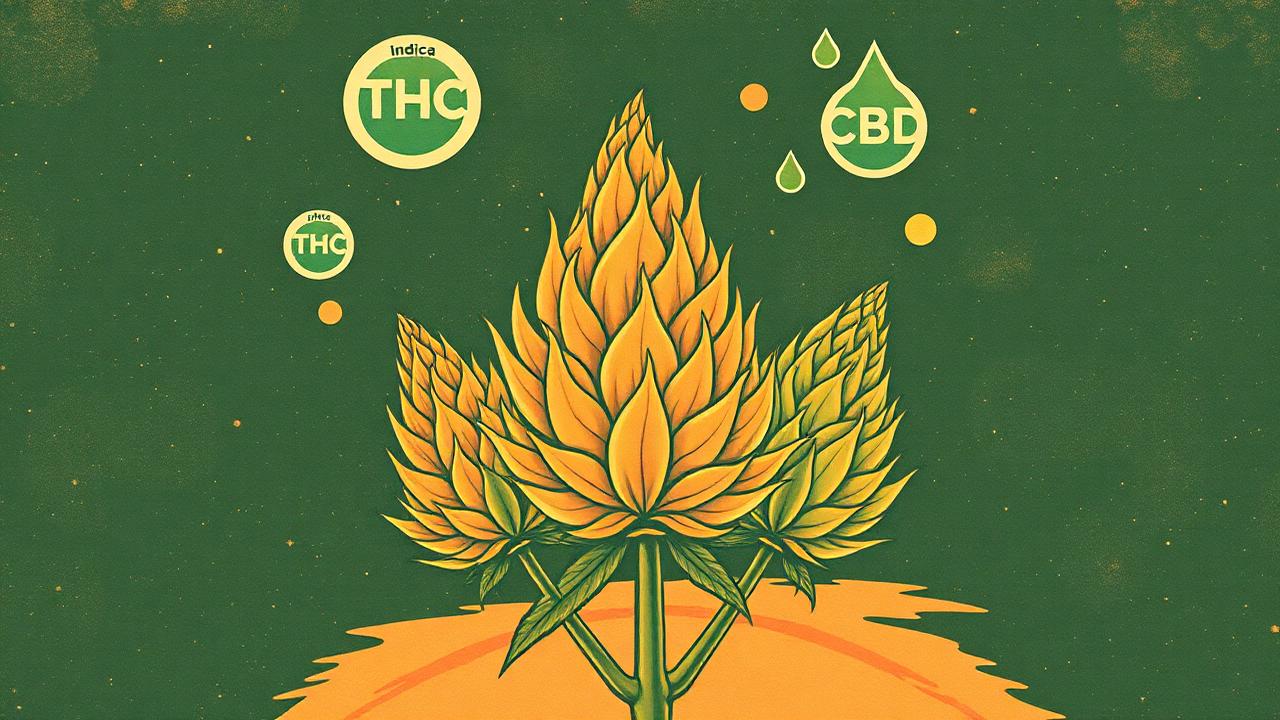
Faktencheck: Falsch. Diese Annahme ignoriert die enorme biochemische Vielfalt der Pflanze. Sorten unterscheiden sich dramatisch in ihrem Profil aus Cannabinoiden und Terpenen. Eine Sorte mit hohem THC-Gehalt hat eine völlig andere Wirkung als eine mit viel CBD. Zusätzlich modulieren Terpene – die Aromastoffe der Pflanze wie Myrcen oder Limonen – den Effekt. Dieses Zusammenspiel nennt man „Entourage-Effekt“. Ein Blick in unsere Strain-Bibliothek macht die Unterschiede deutlich.
Mythos 7: „Cannabis im Straßenverkehr ist unproblematisch"
Faktencheck: Falsch und gefährlich. Unter dem Einfluss von Cannabis Auto zu fahren, ist kein Kavaliersdelikt. Die Substanz beeinträchtigt nachweislich Reaktionsvermögen und Koordination. Seit Inkrafttreten des Cannabisgesetzes (KCanG) gilt in Deutschland ein gesetzlicher THC-Grenzwert von 3,5 Nanogramm pro Milliliter Blutserum. Wer darüber liegt, riskiert beim ersten Verstoß 500 Euro Bußgeld und einen Monat Fahrverbot. Die genauen Regeln des KCanG sollte jeder Konsument kennen.
Mythos 8: „Medizinisches Cannabis ist nur ein Trick"
Faktencheck: Falsch. Es ist ein reguliertes Arzneimittel. Die Vorstellung, Medizinalcannabis sei nur ein Vorwand, ist widerlegt. Seit 2017 können Ärzte in Deutschland Cannabis auf Rezept verschreiben. Es wird bei schweren Erkrankungen wie chronischen Schmerzen, Spastiken oder der Übelkeit während einer Chemotherapie eingesetzt. Die Produkte aus der Apotheke unterliegen strengen pharmazeutischen Standards. Dass die Therapie auch für weitere Indikationen wie ADHS zunehmend anerkannt wird, belegen etwa die neuen ADHS-Leitlinien.
Fazit
Kaum ein Cannabis-Mythos ist komplett falsch, aber fast keiner ist vollständig richtig. Die Realität liegt oft dazwischen. Statt in den simplen Kategorien „harmlos“ oder „Teufelszeug“ zu denken, hilft ein Blick auf die Fakten. Ein informierter, bewusster Umgang ist der Schlüssel. Informationen über den Weg zum Cannabis-Rezept und der Produkt-Finder helfen dabei.
Cannabis and myths: a stubborn connection. Legends that have persisted for decades. Some have a kernel of truth, many are simply false. We examine the eight most persistent claims – and what science really says about them.
Myth 1: "Cannabis is a gateway drug"
Fact check: Largely disproven. The "gateway hypothesis" is a classic in drug prevention, but research paints a different picture. The vast majority of cannabis users do not switch to harder drugs. The decisive factor seems to be not pharmacological, but social: where the market is regulated, as in the Netherlands or Canada, contact with illegal drug trafficking is eliminated. And with it, access to other substances. The first EKOCAN interim report on partial legalization in Germany also found no evidence of an increase in hard drug use.
Myth 2: "Cannabis makes you stupid"
Fact check: Depends on age and dose. In adults, cognitive impairments after use are usually temporary and reversible. The often-cited Dunedin study from 2012, which found a permanent IQ loss, examined adolescents whose brains were still developing and who consumed excessively. For adult occasional users, permanent cognitive damage has not yet been proven.
Cannabis on prescription?
Compare telemedicine providers and start your cannabis therapy today – easy, legal and from home.
Become a patient now →Myth 3: "Cannabis destroys lungs like cigarettes"
Fact check: Only true when smoking – and avoidable. Those who consume cannabis as a joint, especially mixed with tobacco, inhale combustion products. This irritates the lungs. However, a long-term study by UCLA found that moderate, pure cannabis smoking impairs lung function far less than tobacco. The solution is technical: vaporizing instead of burning. A vaporizer heats the material only enough to release the active ingredients – more on this in our Guide to consumption methods. Dabbing also works without an open flame, but due to the high concentration of active ingredients, it is only intended for experienced users.
Myth 4: "Cannabis is addictive"
Fact check: Psychological addiction is possible, but less common than with alcohol or tobacco. Cannabis can cause psychological dependence. According to studies, the risk affects about 9 percent of regular users. For comparison: with alcohol, the rate is 15 percent, and with tobacco, it's even 32 percent. Pronounced physical dependence is rare. Withdrawal symptoms such as irritability or sleep problems can occur, but usually subside after a short time.
Cannabis on prescription?
Compare telemedicine providers and start your cannabis therapy today – easy, legal and from home.
Become a patient now →Myth 5: "Cannabis causes psychosis"
Fact check: Complicated. Cannabis can be a trigger, but not a cause. Research shows a correlation, not causation. Heavy use, especially of THC-rich strains at a young age, can increase the risk of psychosis or accelerate an outbreak in individuals with a genetic predisposition. So, cannabis does not "create" psychosis out of nowhere. CBD, the non-intoxicating antagonist of THC, however, appears to possess antipsychotic properties. Research, such as the Charité study on CBD, underscores the therapeutic potential of cannabinoids.
Myth 6: "All cannabis strains have the same effect"
Fact check: False. This assumption ignores the enormous biochemical diversity of the plant. Strains differ dramatically in their cannabinoid and terpene profiles. A strain with a high THC content has a completely different effect than one with a lot of CBD. Additionally, terpenes – the plant's aromatic compounds like myrcene or limonene – modulate the effect. This interplay is called the "entourage effect". A look at our Strain Library makes the differences clear.
Myth 7: "Cannabis in traffic is unproblematic"
Fact check: False and dangerous. Driving under the influence of cannabis is not a trivial offense. The substance demonstrably impairs reaction time and coordination. Since the Cannabis Act (KCanG) came into force, a legal THC limit of 3.5 nanograms per milliliter of blood serum applies in Germany. Those who exceed this limit risk a €500 fine and a one-month driving ban for a first offense. Every consumer should be aware of the exact rules of the KCanG.
Myth 8: "Medical cannabis is just a trick"
Fact check: False. It is a regulated medicine. The idea that medical cannabis is just a pretext has been disproven. Since 2017, doctors in Germany can prescribe cannabis on prescription. It is used for severe illnesses such as chronic pain, spasticity, or nausea during chemotherapy. Products from the pharmacy are subject to strict pharmaceutical standards. That the therapy is also increasingly recognized for further indications such as ADHD is evidenced by the new ADHD guidelines, for example.
Conclusion
Hardly any cannabis myth is completely false, but almost none is entirely accurate. The reality often lies somewhere in between. Instead of thinking in simplistic categories of "harmless" or "devil's weed," a look at the facts helps. Informed, conscious use is key. Information on the path to a cannabis prescription and the product finder can help.